



October 19, 2026 · Harmony Air
A technician is standing in your garage. Repair or replace your AC unit, he says, and the two numbers are very far apart. You have maybe five minutes to decide, it is hot, and you have no way to judge whether the advice is sound.
That is a bad position to be in. It is also avoidable. The decision comes down to five factors you can evaluate yourself. Here they are, along with the one thing to insist on before you decide anything.
Repair or replace an AC unit: what should I ask for first?
Both numbers, written down, before you decide. The repair cost and the replacement cost, side by side.
This sounds obvious. It is routinely not what happens. A visit that opens with "you need a new system" has skipped the step where you got to compare. Giving both numbers is our standard practice on every repair-or-replace call. It is also the most useful thing a homeowner can demand.
If you only get one number, ask for the other. If the answer is vague, get a second opinion. Ours are free. That is not a promotion, it is how we work.
Factor 1: How old is the system?
Age is the strongest single predictor, and in Florida the thresholds are earlier than the national ones.
- Under 8 years. Repair, almost always. The system is well inside its service life and a single failed component is not a reason to replace a functioning unit.
- 8 to 12 years. The real decision zone. Here the repair cost, the refrigerant type, and the repair history all matter.
- Over 12 years. Lean replace on any significant repair. The system is near or past the end of its practical Florida life, and money spent on it buys less remaining time than it would have at year seven.
Why earlier here? Two reasons. Florida systems run far more hours per year than systems up north. And coastal salt air accelerates corrosion on outdoor equipment. A unit that might see fifteen years in a milder climate often shows its age by twelve on the Treasure Coast.
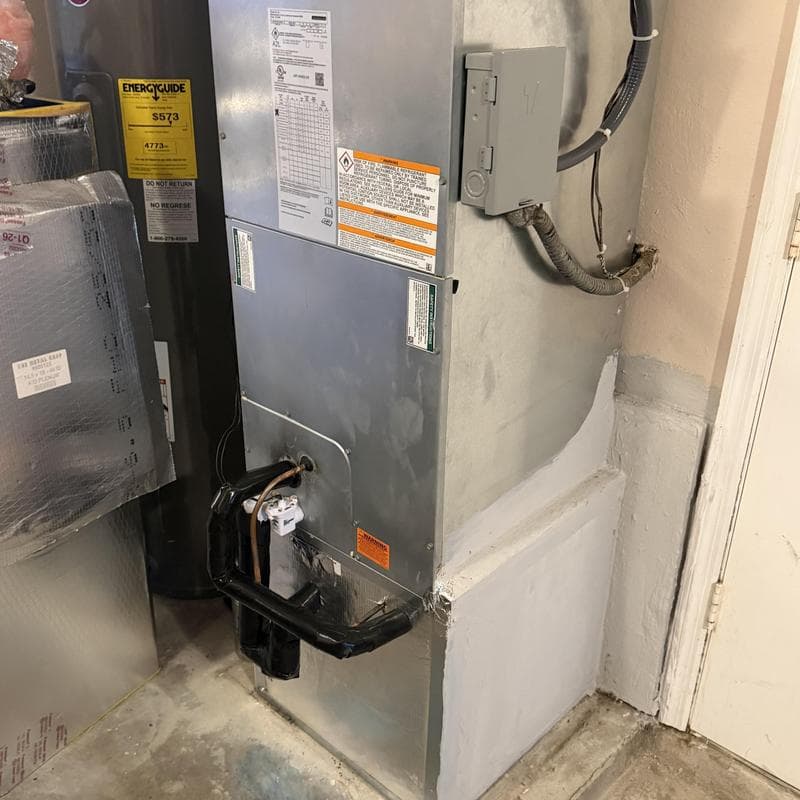
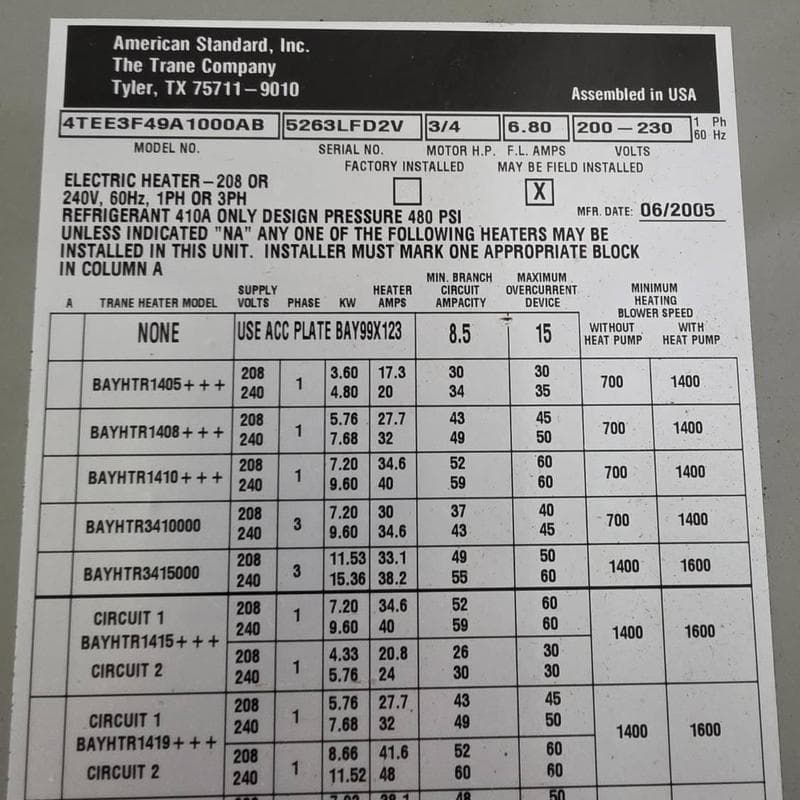
Find the age on the data plate on the outdoor unit. The manufacture date is usually printed there. If it is not, the serial number encodes it.
Factor 2: What does the repair cost relative to replacement?
A typical AC replacement in Port St. Lucie runs about $7,000 to $8,000. Set the repair quote against that:
- Repair under roughly 15% of replacement cost. Repair, at nearly any age. A capacitor, contactor, float switch, or blower motor on a serviceable system is not a replacement conversation.
- Repair between 15% and 40%. Weigh it against age and history. This is where the other factors decide it.
- Repair over 40% of replacement cost. Lean replace, especially past year ten. You are paying a significant fraction of a new system for the remaining years of an old one, with no new warranty.
One caution about percentage rules. They are a guide, not a verdict. On a May call in Sewalls Point we found and patched a pinhole leak in a copper coil, on a unit someone else might have condemned. The system came back for a fraction of a replacement. The right question is always what failed, and what that predicts about the rest of the system.
Factor 3: What failed, and what does it predict?
Some failures are isolated events. Others are the system telling you it is finished.
Some repairs say nothing about the rest of the system.
- Capacitor, contactor, relay. Wear parts. Cheap, common, and no reflection on the system's remaining life.
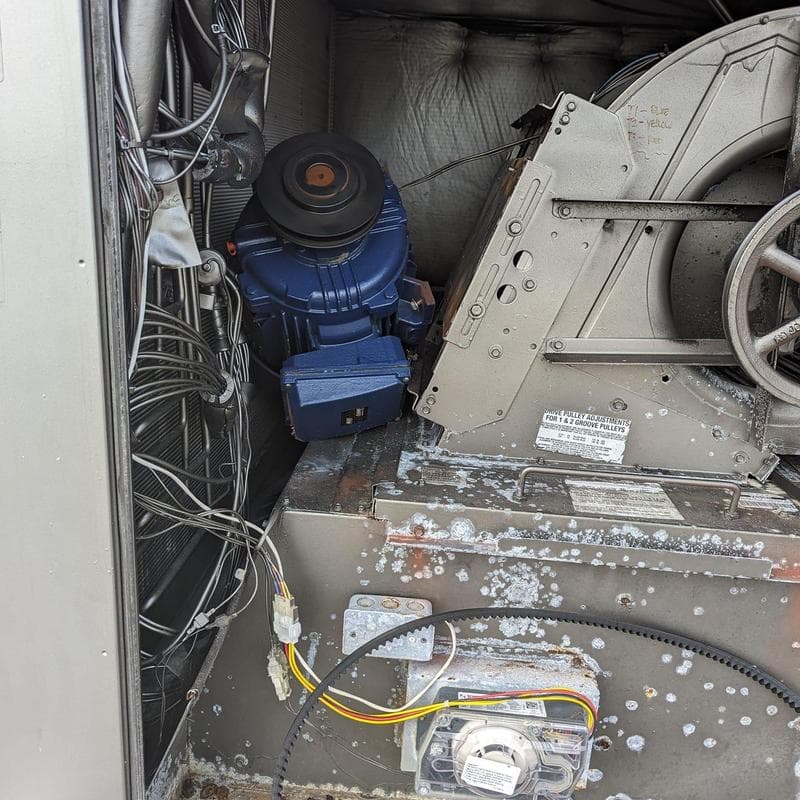
- Blower motor. A real repair, but a contained one. On a July call in Port St. Lucie we replaced a failing blower motor, verified airflow and amp draw, and gave the owner a clear read on the air handler's remaining condition so the next decision would not be a surprise.
- Float switch, thermostat, drain line. Maintenance-adjacent. Not replacement triggers.
- Condenser fan motor. Straightforward, and worth doing even on older equipment. We have saved serious commercial equipment this way, including a 2001 Trane rooftop unit that only needed a fan motor.
Other failures genuinely shift the math.
- Compressor. On a system past ten years, replacement usually makes more sense than a compressor swap.
- Evaporator or condenser coil leak. Coils are expensive. The decision depends heavily on refrigerant type and age.
- Repeated refrigerant loss with no located leak. You are funding an annual service call indefinitely.
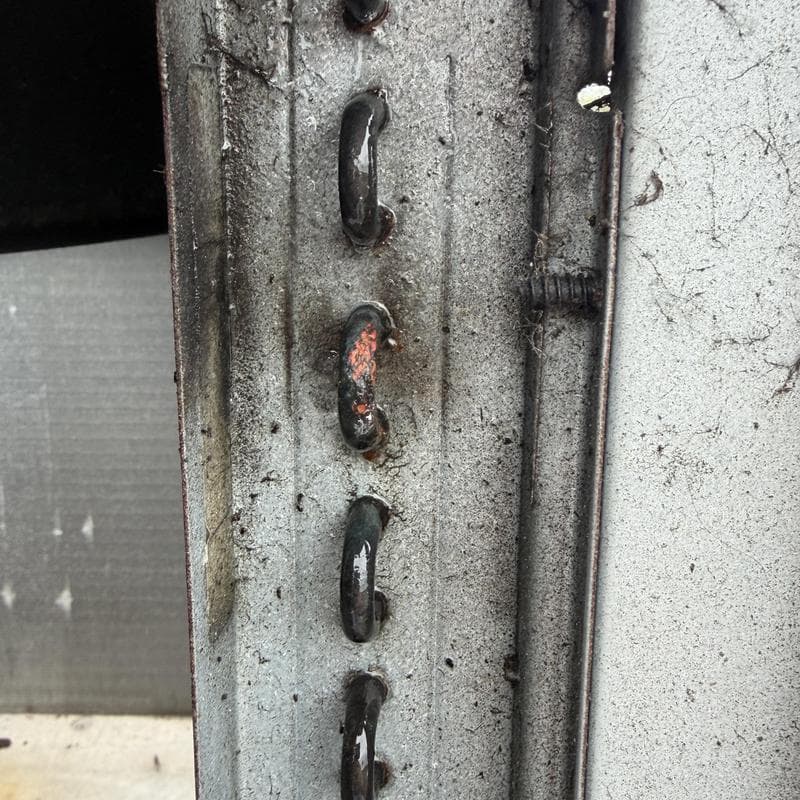
- Rusted or cracked drain pan plus corroded coil. Those usually travel together and indicate the cabinet's condition overall.
Factor 4: What refrigerant does it use?
If your system runs R-22, that pushes the decision toward replacement on any refrigerant-related repair. R-22 has been phased out of production. It gets scarcer and more expensive every year. A system that needs it recharged has a cost curve going the wrong direction.
Check the data plate for the refrigerant type. R-22 generally means manufacture before 2010. R-410A is the common replacement generation. Newer equipment uses lower-global-warming-potential refrigerants.
This is why two identical-looking coil leaks can produce opposite recommendations. A coil leak on an R-410A system from 2019 is a repair. The same leak on a 2007 R-22 system usually is not.
Factor 5: How many repairs has it had?
Two significant repairs in one cooling season is a signal, not a coincidence. Components in a system age together, and a unit that has needed the capacitor, then the fan motor, then a refrigerant recharge is working through its failure sequence.
Add up what you have spent on the system in the last two years. If that total approaches a quarter of replacement cost and the unit is over ten, you are already on the replacement path. You are paying for it in installments. You just do not get a new system or a new warranty at the end.
Is a quiet case for repair ever worth making?
Yes, and it is worth saying because the industry rarely does. A repair that buys two or three more seasons on a serviceable system is often the right financial decision, even when a new system is the better long-term outcome. It lets you replace on your schedule rather than in a crisis in August.
Repairs over $500 can be financed with approved credit, which makes this a real option rather than a theoretical one. There is a practical argument too. A planned replacement gets a proper heat load calculation, a considered equipment choice, and a scheduled install day. An emergency replacement gets whatever is on the truck.
We have done plenty of the emergency kind. At 10pm on a Saturday a 20-horsepower motor failed at a local church. We located a replacement and had it running before the 8:00am service. We would rather you not be in that position with your home.
What should I expect from an honest assessment?
Four things:
- A whole-system inspection, not just the failed part. The symptom is where we start, not where we stop.
- The failed component shown to you. You should see the burst capacitor or the corroded coil, not just hear about it.
- Both numbers in writing, repair and replacement, with the reasoning for the recommendation.
- No commission in the room. Everyone at Harmony Air is paid hourly. There is no version of the visit where recommending a repair costs the technician money, which is the structural reason the recommendation can be trusted.
If you are replacing, see what a new AC costs in Port St. Lucie for what the quote should itemize. If the system will not cool and you have not had it looked at yet, start with why your AC is blowing warm air.
Get both numbers
Harmony Air is a veteran-owned HVAC company in Port St. Lucie, licensed under CAC1822339, rated 4.9 stars across 167 Google reviews. JD Harmon owns the company, still answers the phone, and still runs service calls himself.
Estimates and second opinions are free. Holding a quote that gives you only one number? Bring it to us. We will inspect the system, tell you what actually failed, and put the repair figure next to the replacement figure. Then the decision is yours.
Every residential installation carries a 2-year labor warranty from us plus the manufacturer's 10-year parts warranty, and there are no callback fees on warrantied work. Financing is available on new Trane systems including 0% options, and on repairs over $500, with approved credit.
Call (772) 203-2571 and tell us the system's age and what it is doing. Request a service call or ask for a second opinion on a quote you already have.
Keep reading
AC repair in Port St. Lucie, Stuart and Palm City.