



November 2, 2026 · Harmony Air
A clogged AC drain line is the quietest way for an air conditioner to fail. Start with what the system is actually doing: your air conditioner is a dehumidifier that happens to cool. On a humid Treasure Coast afternoon a residential system can pull several gallons of water out of your air, and all of it has to go somewhere. It goes down a length of PVC pipe about three quarters of an inch wide.
When that pipe clogs, nothing dramatic happens. You get something quieter and more confusing. A system that shuts off partway through every cycle. A damp patch near the air handler that you notice a week late. This is the most common service call we run in Port St. Lucie. It is also one of the few you can often fix before we arrive.
What are the symptoms of a clogged AC drain line?
The tell that distinguishes a drain clog from everything else is a system that runs normally for fifteen or twenty minutes and then shuts off on its own, repeatedly. That is not a failing part. It is a safety switch doing its job.
The full symptom list:
- The system cycles off after about twenty minutes, then restarts later and does it again.
- Water pooling around the base of the indoor air handler, or a stain on the ceiling below an attic unit.
- A musty or sour smell from the vents when the system kicks on.
- Standing water in the drain pan under the indoor coil.
- Warm air at the vents with the blower still running, because the float switch cut the cooling circuit but not the fan.
- A gurgling sound from the drain area as water backs up past a partial blockage.
That last group matters. A clogged drain is one of the sneakier causes of an AC that will not cool, and most homeowners never think to check it. We cover the full list in why your AC is blowing warm air.
Why do AC drain lines clog so often in Florida?
Because the conditions inside a condensate line here are close to ideal for biological growth. The pipe stays wet nearly year round, it sits in a warm space, and it carries dust, pollen, and whatever the filter missed. Algae and bacteria form a slime that coats the inside of the pipe, catches debris, and narrows the opening until flow stops.
Florida makes this worse in a specific way. Our systems run far more hours per year than systems elsewhere. That means more condensate through the same small pipe, and more time for growth. A line that might last years up north can clog annually here.
Insects contribute too. A line that terminates outside without a trap or screen is an open invitation. We have pulled plenty of blockages that turned out to be a nest rather than slime.
What is the float switch, and why did my AC stop?
The float switch is a small sensor that detects rising water in the drain pan and breaks the cooling circuit before the pan overflows. If your system shut itself off, that switch almost certainly saved you a ceiling.
This is worth understanding. The switch shutting your AC off in August feels like a malfunction. It is the opposite. The alternative is water finding its way through drywall, insulation, and whatever sits below the air handler. A drain clog is a modest repair. Water damage to a ceiling is not.
On a July call in Port St. Lucie we cleared a clogged condensate drain and replaced the float switch at the evaporator coil. The homeowner had spent days resetting the breaker, trying to get a full cycle out of the system. The switch had been right every time.
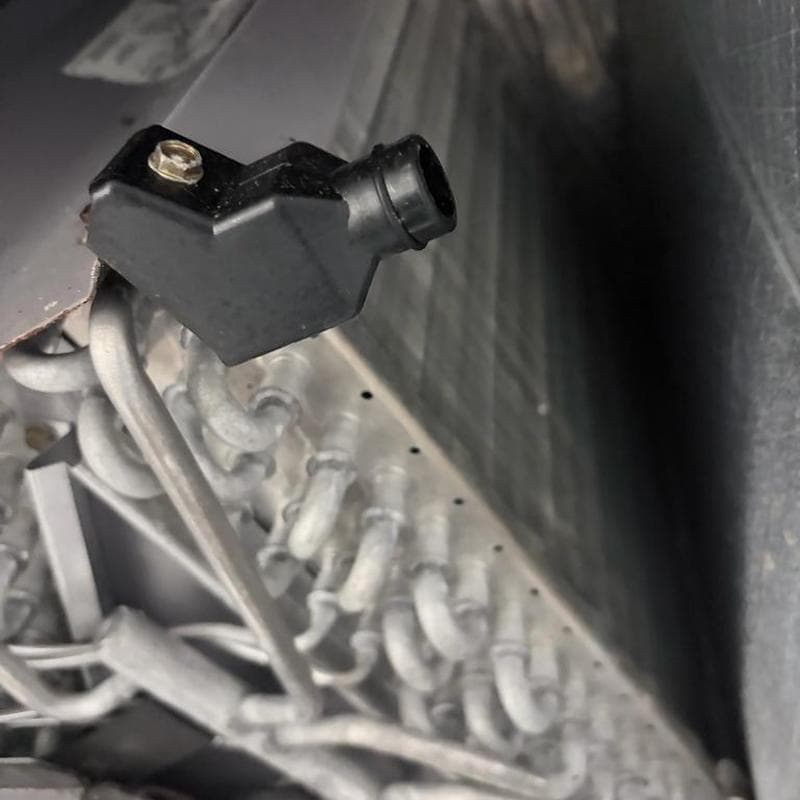
Some older systems do not have a float switch at all. If yours does not, adding one is among the cheapest pieces of insurance available for an air conditioner, and we will tell you if you are missing it.
Can I clear it myself?
Often yes, and it is worth trying. Find the drain line's exterior termination, usually a white PVC pipe emerging from the wall near the outdoor unit, and apply suction with a wet/dry vacuum.
The steps:
- Turn the system off at the thermostat and at the breaker.
- Locate the outside end of the condensate line. It is typically a short length of white PVC stubbing out of an exterior wall.
- Seal a wet/dry vacuum hose over the opening, using a rag or duct tape to get a tight fit, and run it for two or three minutes. You will usually hear the clog release.
- Find the access tee near the indoor air handler, a capped T-fitting in the drain line. Remove the cap.
- Flush with a cup of distilled vinegar, which breaks down the biological film without damaging PVC or the drain pan. Let it sit, then follow with water and confirm it runs out the exterior end.
- Replace the cap and restore power.
Two cautions. Do not use bleach as a routine treatment: it is harsh on the metal drain pan and on the glue joints in the line, and vinegar handles the growth. And do not pressurize the line with a garden hose or compressed air. That can blow a glue joint apart inside your ceiling, which converts a free fix into a drywall repair.
If suction does not clear it, stop. A blockage that will not move means one of three things. The clog sits further along the line. The line has a sag holding standing water. Or the pitch was wrong from the day it was installed. None of those should be forced.
What does professional drain line cleaning involve?
More than clearing the blockage, because the blockage is a symptom. On a September call in Port St. Lucie we flushed a clogged condensate line and treated it to stop the algae reforming. Then we watched the system run to confirm it drained clean before leaving. The treatment is the part that decides whether you call us again in three months.
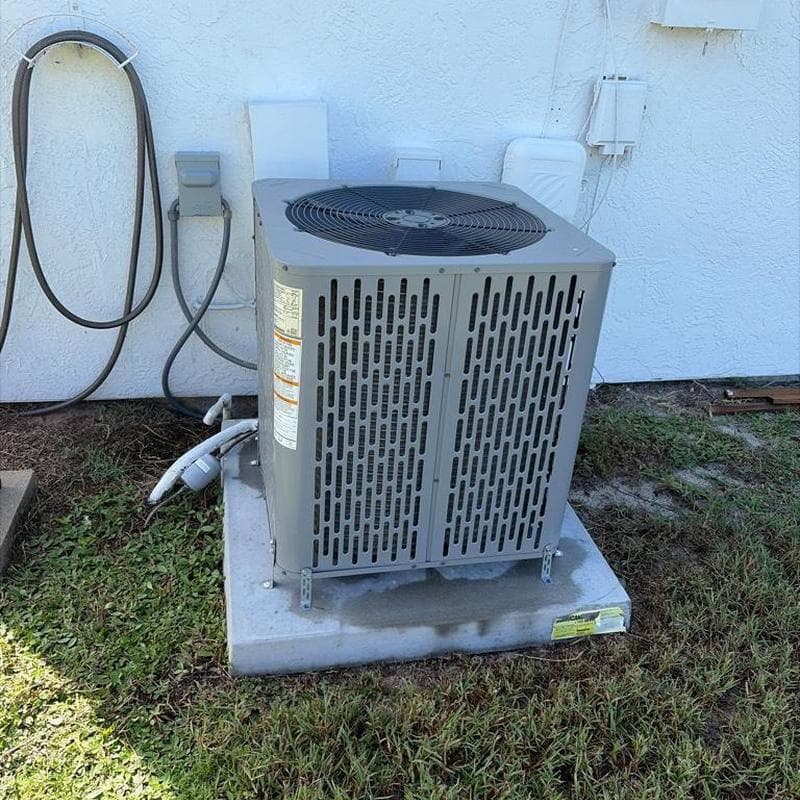
A proper visit also checks what causes repeat clogs. Pitch, and whether low spots are holding water. The trap. Whether the drain pan is rusted or cracked. Whether the float switch actually works. On a July call in Stuart the drain cleared easily. The condensate pump was the real question, so we tested it under load to confirm it moved water and did not leak.
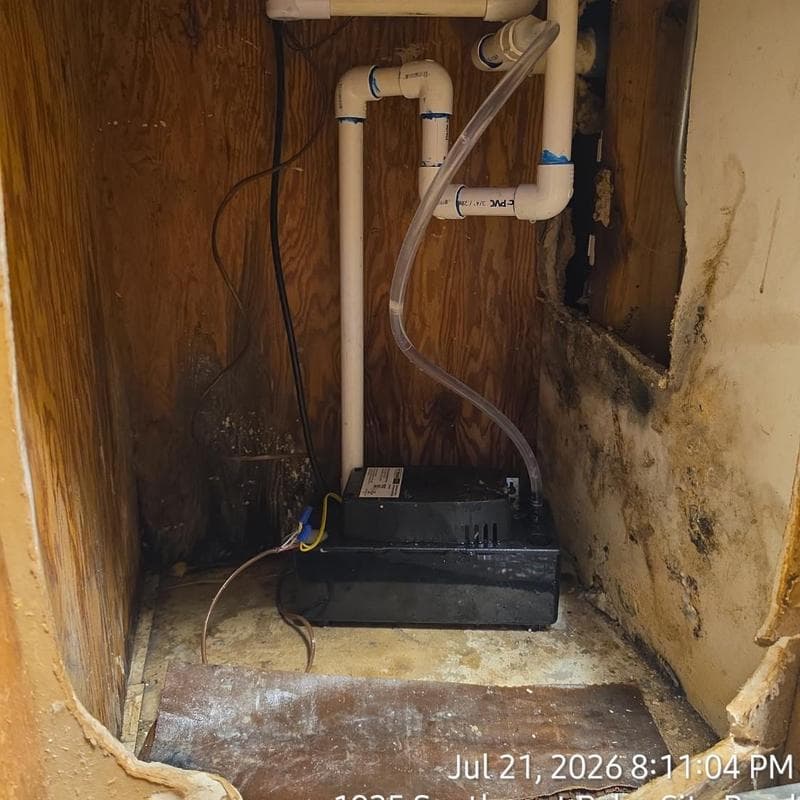
If a line clogs twice in a year, that is not bad luck. It is pitch, a sag, or no treatment.
How do I keep the drain line from clogging again?
Three habits cover most of it:
- Pour a cup of distilled vinegar down the access tee every two or three months. This is the single highest-value maintenance task a Florida homeowner can do on an air conditioner, and it costs about two dollars.
- Change the filter on schedule. Every bit of dust that gets past the filter ends up in the drain pan.
- Keep the exterior termination clear of mulch, soil, and plants, and make sure it is screened against insects.
Beyond that, condensate treatment is a standard part of a real maintenance visit. It is also the clearest illustration of what the $29 tune-up flyers in your mailbox really are. That price does not cover the labor to pull a blower, clean a coil, treat a drain, and test the system. It covers a technician's time to find something to sell you. Real preventative maintenance costs more. It is worth it.
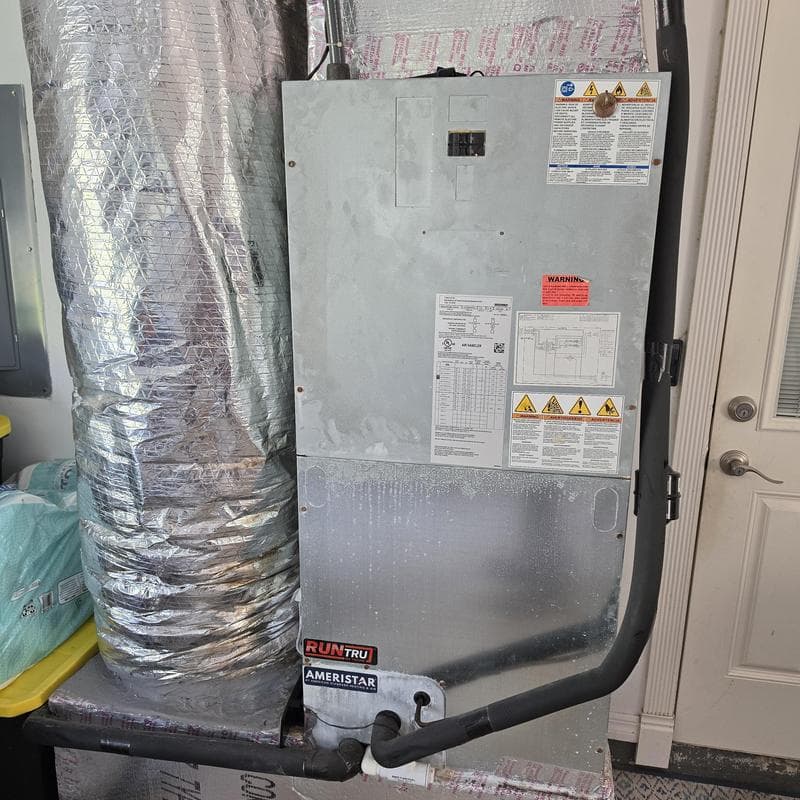
Our Fine Tunin' Agreement members get 10% off all parts and priority scheduling, which matters most in the weeks when everybody in Port St. Lucie is calling at once.
When should I call instead?
Call us when any of these apply:
- Suction did not clear the line.
- You see water damage, not just water.
- The system keeps shutting off after you cleared the drain.
- The drain pan is rusted or cracked.
- The same line has clogged more than once in a year.
That last one matters most. It means something about the installation needs fixing rather than cleaning.
Get the line cleared and treated
Harmony Air is a veteran-owned HVAC company in Port St. Lucie, licensed under CAC1822339, rated 4.9 stars across 167 Google reviews. JD Harmon owns the company and still runs service calls himself.
Nobody here is paid on commission, so a drain clog gets diagnosed as a drain clog. We inspect the whole system rather than the symptom. The line gets cleared and treated, then we check the pan, the pitch, and the float switch. Before leaving, we run the system to confirm it drains clean.
We answer 24/7. Sundays and holidays are billed at double time. We say so before we come out.
Call (772) 203-2571 and tell us what you are seeing, including whether the system shuts off on its own and roughly how long it runs first. Request drain line service or ask about the Fine Tunin' Agreement if you would rather stay ahead of it.
Keep reading
AC maintenance in Port St. Lucie, Stuart and Palm City.