



November 9, 2026 · Harmony Air
You can hear the system running, and there is air at the vents. It is simply the wrong temperature, on an afternoon when it is 94 degrees outside. An AC blowing warm air is the most common no-cool call we take.
That combination narrows the field more than it first appears. A unit that runs but will not cool has roughly eight possible causes, and they fail at very different rates and cost very different amounts to put right. The part that fails most often happens to be one of the cheapest in the system, while the one everybody is afraid of is one of the rarest.
What follows is the order a technician actually checks them, and what each answer means for the repair. The cheapest and most common causes come first, because that is where the problem usually turns out to be.
Why is my AC blowing warm air?
In most houses, the indoor blower is still running while the outdoor unit has stopped, or airflow across the indoor coil has been choked off. Either way, the fan keeps pushing air through a coil that is no longer cold, so what reaches the vents feels like the air already in the room.
That is the fork in the road, and you can see it from the yard. The condenser is the big box with a fan in it. If the fan is spinning and the unit is humming, the trouble is probably airflow or refrigerant on the indoor side. If the box is silent, the trouble is electrical, or it sits in the outdoor unit itself.
Check 1: Is the thermostat actually calling for cooling?
Start here, because it costs nothing to look. Confirm the thermostat is set to COOL rather than FAN ON, and that the setpoint sits below the temperature in the room.
FAN ON is the setting that catches people. It runs the blower whether or not the system is cooling, which gives you exactly the symptom you are living with: steady air, and none of it cold. Switch the fan to AUTO. If the screen is blank, or the thermostat is behaving oddly, put fresh batteries in before you assume anything else has failed.
Check 2: Is the air filter clogged?
A filter heavy enough to restrict airflow will stop a system from cooling, and in Florida it is the most common cause a homeowner can fix without a truck. Pull the filter and hold it up to a light. If the light does not come through, replace it.
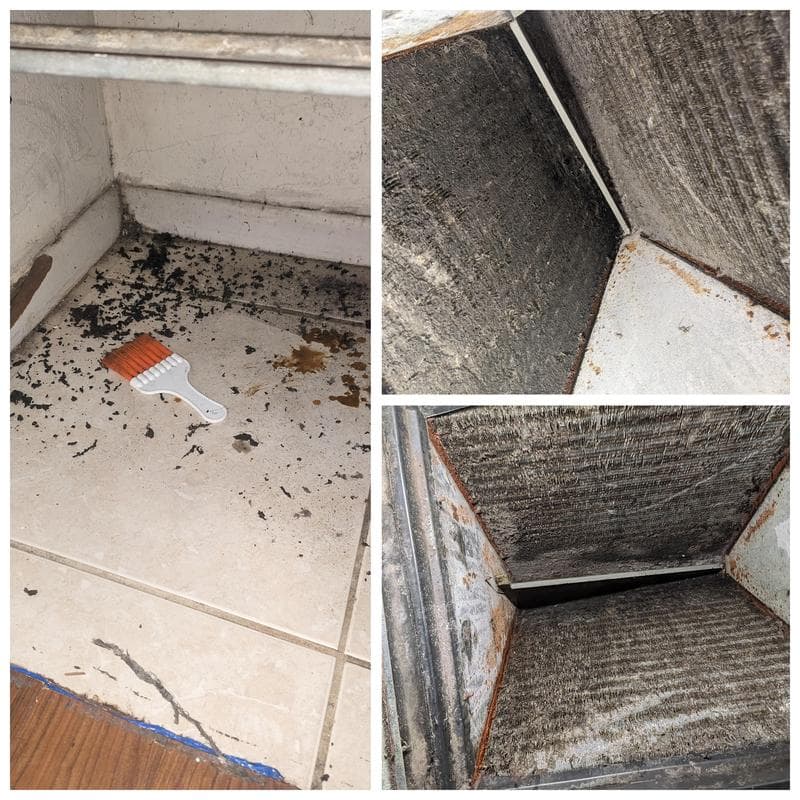
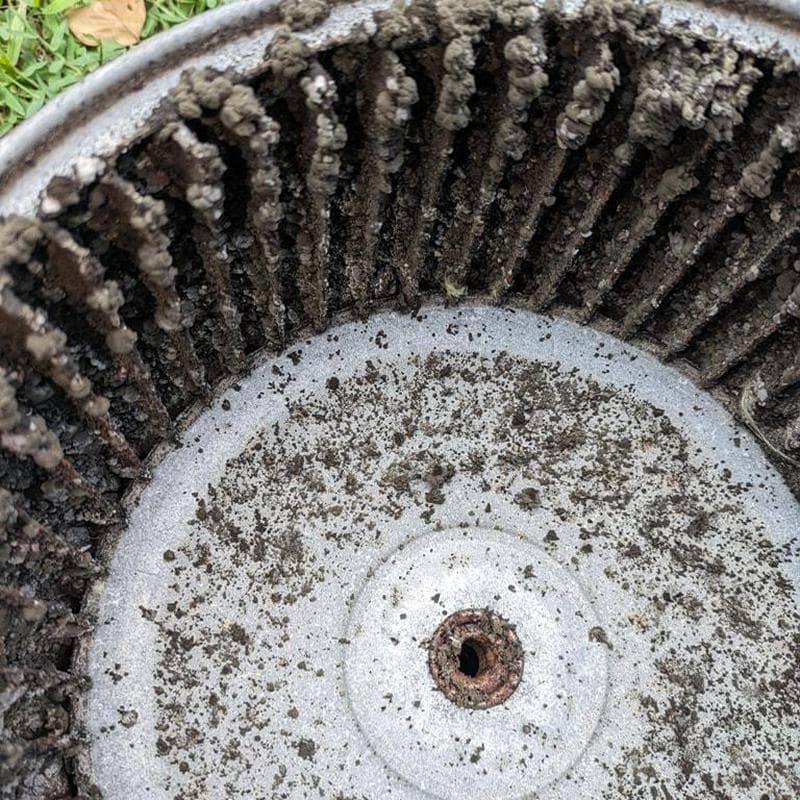
The reason it matters is what happens next. Restricted airflow drops the evaporator coil below freezing, ice builds across the coil, and that ice chokes the airflow further, so the system spends the afternoon fighting itself. We see the end of that cycle often. On a March call in Port St. Lucie the evaporator coil was frozen solid and filthy, and the repair was to thaw it, clean the coil, and give it air again. There were no parts to replace. The system had simply been starved of air for too long.
Check 3: Is the indoor coil frozen?
If you find ice on the refrigerant lines or on the coil, shut the system off at the thermostat and let the fan run by itself. That thaws the coil without making more cold, and it takes a few hours.
A frozen coil has two causes, and they lead to different repairs. Restricted airflow is the kinder one, usually a filter, a dirty blower wheel, or vents that have been closed. Low refrigerant is the other, and that means a leak in a system that is supposed to be sealed. Ice is a symptom rather than a diagnosis. Thawing the coil can bring the cooling back for an afternoon, but if a leak is what froze it, the ice will return within a few days.
Check 4: Did a safety switch shut the cooling down?
This is the one almost nobody guesses, and it is common enough in Florida that we look for it early. A clogged condensate drain trips a float switch, and the switch cuts the cooling circuit while leaving the blower running.
You get warm air at the vents, with no obvious fault anywhere else. On a July call in Port St. Lucie we cleared a clogged condensate drain and replaced the float switch at the evaporator coil, and the cooling came straight back. The switch had been doing its job, which was to stop the system before an overflow put water through the ceiling.
If there is water near the air handler, or the system shuts itself off about twenty minutes into every cycle, our guide on a clogged AC drain line is the one to read. That is likely the answer.
Check 5: Is the outdoor unit getting power and running?
If the condenser is silent, check the breaker in the main panel and the disconnect on the wall beside the unit. A breaker can trip for a reason that has already passed, and resetting it once is reasonable. If it trips a second time, leave it and call. A breaker that will not stay on is telling you something is drawing current it should not.
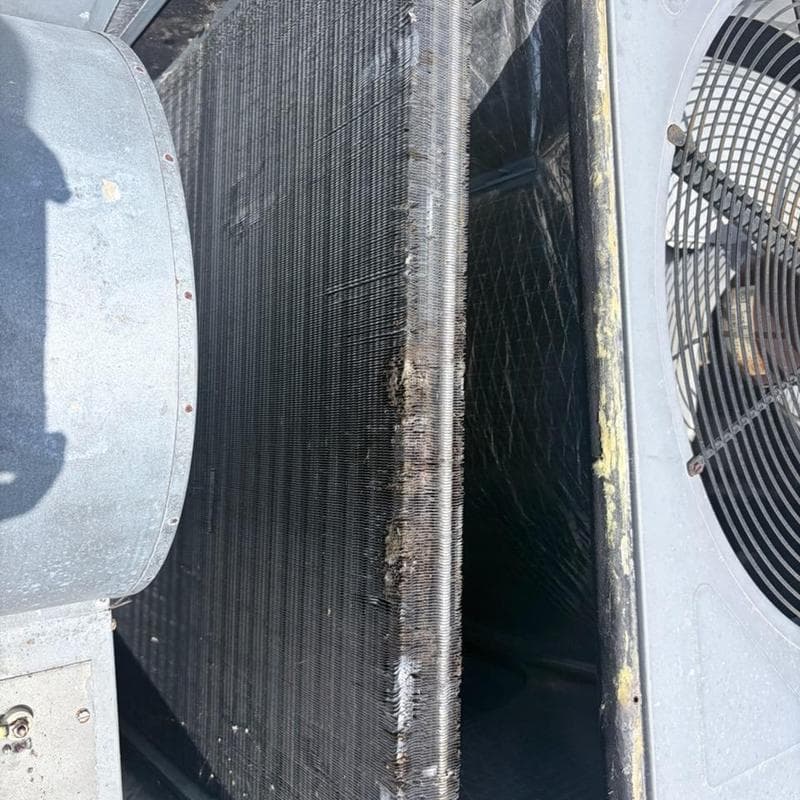
While you are outside, look at the coil, the metal fins wrapped around the cabinet. Grass clippings, dryer lint, and dirt packed into those fins keep the system from shedding heat. On a July call in Port St. Lucie the whole repair was cleaning a condenser coil that had filled with debris. Airflow and refrigerant pressures came back where they belonged, the house cooled, and the unit drew less power once it could breathe.
Check 6: Is it the capacitor?
This is where the checks you can do at home end, and ours begin. The run capacitor is the single most common failed part on a no-cool call, and it is one of the least expensive repairs in the system.
A capacitor gives the fan motor and the compressor the jolt they need to start. When it weakens, the signs are fairly specific: the compressor hums or clicks and never quite starts, or the outdoor fan sits still while the rest of the unit tries to run. It is a small cylinder, and it fails from heat and from age. A Florida summer supplies both.
We look here early because this is where an honest diagnosis and a convenient one part ways, and the difference is expensive. A weak capacitor on a ten-year-old system is a small repair. It is also an easy moment for someone to tell you the system is finished.
Nobody at Harmony Air is paid on commission. Everyone is hourly, so when we say the capacitor is the problem, there is no version of the afternoon in which we earn more by naming something else.
Check 7: Is refrigerant low, and why?
Low refrigerant always means a leak, because a sealed system does not use refrigerant up the way a car uses oil. Anyone who adds refrigerant and leaves without finding the leak has sold you the same call again next summer.
Finding the leak is the work. On a May call in Sewalls Point we found a leak in a copper coil, patched it, pressure-tested for any others, evacuated the system, and brought it back online. The repair cost a fraction of a new coil, and it held, because we had found the hole rather than guessed at it.
Not every leak is worth repairing, and it is better to say so plainly. A pinhole in a line you can reach is a repair. A leaking evaporator coil on a twelve-year-old R-22 system usually is not. That is the conversation in which you should be handed the repair number and the replacement number together, rather than only one of them.
Check 8: Is it the compressor?
A failed compressor is the expensive ending, and it is also the least likely one. It belongs on the list because it is what people are quietly afraid of while the technician is working, but it sits last for a reason. Seven cheaper and more common faults come before it.
When a compressor has genuinely failed on an older system, replacement usually makes more sense than repair. A typical AC replacement in Port St. Lucie runs about $7,000 to $8,000. You should see that figure beside the repair figure, not in place of it, and you should see both before anyone asks you to sign. For what tips the decision one way or the other, see repair or replace your AC.
What should I do before calling?
There are four things worth doing first, and together they take about ten minutes.
- Set the thermostat to COOL and the fan to AUTO, with the setpoint below the temperature in the room.
- Check the filter, and replace it if light will not pass through.
- Look at the outdoor unit, and note whether the fan is spinning, the unit is humming, or the box is silent.
- Look for ice on the coil or the refrigerant lines, and for water near the air handler.
Then turn it off. A frozen or struggling system left running for hours can damage the compressor, and that is how a small repair becomes a large one.
When is it worth calling instead?
Call when the breaker trips more than once, when you find ice, when there is water near the air handler, when the outdoor fan will not spin, or when the filter and the thermostat were both fine and the house still will not cool. Any of those is past what you can safely reach.
Tell us what you found. "The outdoor fan is not turning, and the breaker tripped twice" means the technician arrives expecting an electrical fault, with the parts for it already on the van. That visit is shorter, and the bill is smaller, than one that begins with "it is not cooling."
Get it diagnosed properly
Harmony Air is a veteran-owned HVAC company in Port St. Lucie, licensed under CAC1822339, with a 4.9 rating across 167 Google reviews. JD Harmon owns the company. He still answers the phone, and he still runs service calls himself.
We look at the whole system rather than the symptom in front of us, find the part that actually failed, show it to you, and run the system before we leave. Every residential installation carries a 2-year labor warranty from us on top of the manufacturer's 10-year parts warranty, and there are no callback fees on work that is still under warranty. Repairs over $500 can be financed with approved credit, and a first AC repair is $50 off.
We answer 24/7. Sundays and holidays are billed at double time, and we say so before a truck rolls, not after.
Call (772) 203-2571 and describe what the unit is doing. Request AC repair, or see our emergency service if it cannot wait until morning.
Keep reading
AC repair in Port St. Lucie, Stuart and Palm City.